Contact
XScams, Scams, and More Scams
As every living author with an email account, social media page, blog, or other publicly accessible medium knows, scams aimed at us have increased in frequency—if not efficacy—over the last couple of years—by at least a couple orders of magnitude. In this month’s blog, let’s go over how we got here, a few of the most common scams, and the tactics to mitigate risk.
First off, though, every author and aspiring author out there should know the Writer Beware blog, captained by the amazing Victoria Stauss and supported by several other literary commandos, fighting the good fight. Victoria is always on top of new scams and other threats to writers, and she and the rest of the folks at Writer Beware constantly update the blog with the warnings and answers we need. So, since every day—every second—that passes after the publication of this month’s blog, the information in here will get older and older, and possibly out of date, it’s important for authors to check in with Writer Beware, to keep abreast of new tactics employed by the scammers.
With that, let’s dive in.
How did we get here? The answer won’t surprise you. Up until maybe three years ago, scams against authors were common, but nothing like the flood most of us see every week. Even as recently as 2023-24, I would expect to receive maybe 2 or 3 scam attempts each week, usually through this blog: starting in late ‘24/early ’25, that number shot up to 30 to 50. How? So-called AI or other automation, most likely (as I stated in last month’s blog, there is no such thing as AI, but that’s a topic for another day). The scams of yesterday were rarely perfect, but today’s scams contain all the telltale signs of slopAI: the wrong author name, citing the wrong book, not recognizing a volume in a series, misspellings, and—the worst and most hilarious of them all—tags in an email template that the so-called AI never filled out (e.g. [author name]). Yes, another blight upon humanity brought to you by so-called AI.
So, what do these scams look like? Let’s take a look:
- One of the most common and—as I’ve heard it—effective scams, is the impersonation-and-referral scam.
- The scammer sends a message (email, social media, contact form) pretending to be a famous author; they claim to have enjoyed the mark’s latest book and want to help them by referring them to their agent, editor, or advertiser/marketer.
- In reality, the contact info for the agent or editor, etc, is also fake; when the mark reaches out, the fake agent or editor puts the bite on them, often asking for wire transfers or bitcoin.
- How to avoid being taken in by this scam: trust no one. No famous author is going to reach out to someone they don’t know with an email address; how could they know if you’re a lunatic or not? Famous editors reaching out, saying they want your book/story/etc, but only if you get it polished up by their favorite copyeditor? No, never happens; they receive more than they can deal with now, they ain’t cold-calling anybody. If you think a famous person has, in fact, reached out: verify, verify, verify. But I wouldn’t hold your breath.
- Another common scam, one that goes back to the days before slopAI made it easier to set up, is the fake organization.
- From fake magazines, to fake literary festivals, to fake speaking engagements at bookstores and the like, scammers will pretend to represent venues of all types and then invite authors to submit work, arrange personal appearances, or sign up for virtual talks and events.
- It is usually easy enough to discover the org is fake, just by web-searching for it—or, better yet, pop over to Writer Beware and check the lists.
- They’ll always, always, always ask for money. Sooner or later, before or after a submission or event, the bite will come.
- In the old days before slopAI, there were, of course, fake-ish organizations out there, ones that did offer at least something for the money they bilked from authors. Phony review sites (some of which would populate online stores, which would get the author banned), splashy YouTube pages with little to no traffic, and marketing firms that would offer the moon and deliver as little as possible. Scams have been around forever, but the new kind don’t even bother delivering crap: you give them money and they give you nothing—and then ask for more money.
- Both of the above scams and many more are often preceded by the most basic of cold-calls: “May I speak to the author?”
- It should go without saying, but doesn’t, that you should never jump on a Zoom call or give out your phone number to some random dude from the internet. Once they have more contact information, the scam attempts will increase—and identity theft becomes a lot easier.
- If you do respond, even if it is only through email, the scammer then moves on to recommending you to acquisition editors, copy or developmental editors, marketers and advertisers, and any other service under the sun. All payment in advance, naturally.
- On some occasions, if someone answers the initial approach, the scammer will go in for standard, non-literary scams: honey pots, claims of copyright violation and threats to sue, and sometimes outright blackmail (“give me the bitcoin or I’ll leave a hundred bad reviews across a dozen sites”).
- How do I handle it? Don’t respond. No serious person reaches out like this.
So, who the hell are these people? While individual scammers are always in the mix, imitating the tactics they read about online, the similarity of scam language and approach indicate that the bulk of today’s scams are coming from just a few—or even a single—large criminal syndicates. And this is nothing new. I’ve also worked in scientific publishing for more than twenty years and the growth of criminal syndicates over the decades was as obvious as it was detrimental: papermills (where fake science is submitted everywhere, trying to get an acceptance to a journal by exhausting the editors and then selling authorship to desperate or unscrupulous scientists) have assaulted scientific journals going back a good fifteen years; editorial service providers, some of which are legitimate (e.g. translation services for author teams wishing to submit to English-language journals, rather than their native journals), slipping into pay-to-play authorship scams, or being setup from the get to commit fraud; and fake reviews/reviewer rings, where a group of scientists or fakes will recommend each other as reviewers when submitting their manuscripts for peer review and then returning glowing reviews to the editors—made all the easier if it’s done as part of a papermill, where the editors are exhausted by too many submissions—are all examples of the kind of scams that have assaulted scientific publishing for decades. These same tactics, tuned to fiction, are now inundating authors everywhere, trad as well as indie.
Such criminal syndicates flooding inboxes and social media accounts everywhere have only grown in the scale of their operations since so-called AI has become ubiquitous, but it isn’t just slopAI behind it all. News stories abound, in recent years, of Chinese organized crime—as well as syndicates from other countries—luring in people with fake job notices and then kidnapping them, forcing them to work in slavery conditions, often in remote Southeast Asian countries. The victim of preference possesses good English-language skills and is then forced to support the various scams we all see: they answer the emails when an author is foolish enough to respond, they play the parts of impersonated famous person or editor or marketer, and they ask for the money that they’ll never see, as it goes to those who have enslaved them. The same setup is used for non-literary scams, too, from using dating sites for honeypot scams and blackmail, to fake fundraising scams, pretending to be trapped in a war-torn region or someplace hit by natural disaster. Regardless of all other factors, the mark is always the same: someone credulous enough to believe whatever they’re told without verifying anything. Don’t be that person, don’t chump for these scumbags.
Well, there it is, a short jaunt through the seedy underbelly of publishing. The best defense for authors is to suspect everyone, to not engage unless you have independently verified the people involved and are sure that they have not fallen for a scam. And, of course, as I said at the top of this post, stop by Writer Beware every so often and keep up-to-date on the latest scammer tactics. Good luck and don’t chump for the scumbags.
No AI Now, No AI Ever
It is a sad state of affairs that the below statement must be made, but as a matter of integrity and as a commitment to readers and to my fellow artists, I proudly pledge:
All of my previous books have been, and all of my future books will be, written solely by me, without the use of any so-called AIs, LLMs, or similar devices or programs.
Why is such a statement needed? To put it as simply as possible, so-called AI is theft.
There is no such thing as Artificial Intelligence: it remains what it has always been, a matter of science fiction. What is marketed as AI and, somewhat less dishonestly, as LLMs or Large Language Models, are nothing more than predictive models—a technology that has been around since the 1970s. Most readers are already familiar with the outputs of such models, going back fifty years, in the form of weather reporting. In this first, widely consumed model output, historical weather data—temperature, humidity, wind speed, etc—are gathered into a database, which is then queried by meteorologists to create a weather model, based upon those past data. The model then focuses upon those data in-scope of the meteorologist’s query, assuming that the past will predict the future: if, say, 80% of the time, a thunderstorm over Boise correlates to a rainstorm over Chicago, three days later, when looking back over one-hundred years of data, the model will then return rain over Chicago as the prediction—because that is what exists in its database.
So-called AI works the same way when fabricating text: the huge, environment-, economy-, and health-destroying datacenters are the databases upon which the models draw, looking not only at weather data this time, but at as much data on as many subjects as can be packed in (at times, illegally or without notice to the original creators). When a user enters a prompt—which is, in fact, a database query—the model returns a prediction result. If you ask the so-called AI to write a review of a recent movie, the program will not watch the movie and offer an opinion—because it is not sapient and incapable of reason, it is simply a mathematical model—but, rather, the so-called AI will instead focus upon all movie reviews to which it has access, scraping their prose for the format of a movie review, lifting the content of other reviews of the movie queried, perhaps inserting copy taken from the movie’s tag line and description, and it then predicts what a review of that movie would look like. The so-called AI is not writing a movie review: it is predicting what the writers within its datacenter would have written—using their words.
The negative effects are as obvious as they are nefarious. In the first place, artists’ works are accessed—often without their consent or knowledge and without compensation or recognition—and reproduced, amalgamated with other stolen works to obfuscate their origins. The accuracy of the so-called AIs’ predictions are now known to be highly suspect, if not flat-out nonsensical, leading to the term AI slop, but the negatives go deeper and last longer. Because so-called AI accesses a finite database in its datacenters and produces a prediction based upon those data, new thought, new analysis, new assertions, art, direction, and experiences become impossible, only the endless reproduction of extant assets, the quality of which degrades with each prediction. Like photocopying a picture and then repeatedly photocopying the resulting output, over and over again, quality and usefulness degrade to the point of total obliteration.
Perhaps more damaging to humanity than the cessation of new art, thought, and experience, is the hampering of humans’ abilities to reason, to think, and to create. There are now legions of would-be authors and other creators using so-called AI to steal from real artists, using the prediction models to guess what their intended work would look like—and in the process steal the human-authored works of countless real people. Beyond the degradation of those individuals and the rule of law, those would-be authors will now never grow, never develop the skills to actually tell the stories they would like to tell. They are thieves, yes, but they are victims, too.
With a generation now going through their education while relying more and more on the flawed, continually degrading so-called AI prediction outputs, these students are not developing the reasoning abilities that would have otherwise empowered their voices, their works, and protected them against the falsehoods of domestic politicians and foreign adversaries—and the billionaires everywhere who hope to steal from us until there is nothing left. I’m sure the billionaires look upon the dumbing-down of the world’s youth as a feature, not a flaw, of their predictive models.
In closing, I reiterate that all of my books are written by me and always will be. I do not condone the use of so-called AIs, LLMs, or any other predictive models. I encourage all aspiring artists to do the work necessary to developing their skills, their minds, and to truly become the artists they wish to be and to reject the easy path of theft.
New Novel Release: “Logos of Cain,” book 5 in “The Cain Series” by Seth W. James
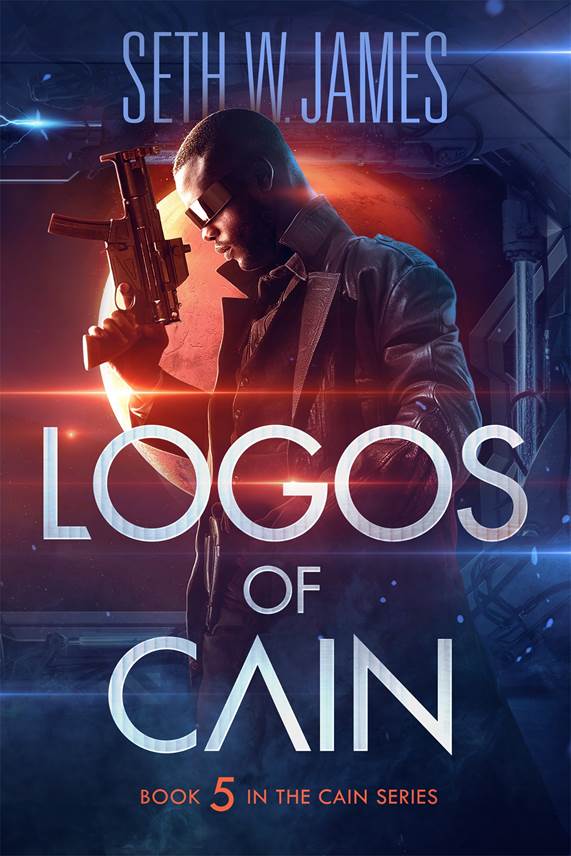
Houston, we have a book launch! Logos of Cain, book 5 in The Cain Series, published today in ebook, paperback, and hardcover formats. Logos of Cain is not only the next episodic, near-future, cyberpunk science fiction novel in The Cain Series, it is also the closing novel in the series’ first novel cycle, completing the overarching storyline that began with book 1, Ethos of Cain. Cain and Francesca’s story is not over, of course, as cycle 2 begins immediately with book 6, which is already under way; more on that later. Today is all about Logos of Cain.
It’s sad that the world in which we currently live requires such a statement, but to reiterate: Logos of Cain, like all of my novels, is handcrafted cyberpunk, written by a human (me) for human readers. Permission denied for use or access by “AI,” “LLMs,” or similar devices or programs. Cover art also by a human only, James T. Egan of Bookfly Design.
Only a few weeks have passed since the tragic events that concluded The Fall, when Logos of Cain opens: Cain and Francesca have now returned to the orbital archipelago and, ostensibly, to Cain’s former life as a soldier of fortune, prepared to take scores for the highest bidder, be they governmental, corporate, or criminal. But the transition back to the shady side of the street is anything but smooth—and not only for Francesca, adjusting to a new reality, but also for Cain. As the two struggle with reentry issues, though, a familiar antagonist is lurking just out of sight.
The back-cover copy:
“After the events of book 4, The Fall, with Francesca’s now infamous flight from government service, Cain returns with her to the orbital archipelago and to his former life in the commerce in violence. As Francesca struggles to make peace with the consequences of her choices—and with her new reality as a gun-for-hire—Cain, too, finds himself struggling with reentry issues, as the scores that he had once pulled down no longer satisfy him.
Unwilling to accept the role of expendable, Cain soon demands greater control over how he and Francesca pursue the goals of their corporate, governmental, and criminal employers—and immediately find themselves squaring off against the heaviest marks, from raiding a secret Korean cybernetics laboratory to executing a hit on Gate Station Mars.
As a possible new future together takes shape, however, the past proves restless, as an old adversary of Francesca’s appears with a multilayered scheme to undo all that she had built in her former life. Cain and Francesca—along with their handpicked mercenary crew—must then swap scores with the archipelago’s most brazen crime lord, to eradicate the despicable, to preserve the indispensable.”
It’s hard to believe that four years have passed, writing Cain Series books, and yet here we are. The Cain Series has now reached a goal that I had first envisioned back in 2022, just after the COVID lockdowns, when it seemed like democracy might return to the United States, and I intended the stories I would tell in the series to be the warnings cyberpunk authors have always issued. But now, as the series reaches this major milestone, I see too many of the elements I described—billionaire fascists reenacting the 1930s, naked market manipulations prosecuted by war, the explosion in AI-enabled false reality, etc, etc—showing up in the news each day, each week. The precarious position in which the world again finds itself is, of course, all the more reason to continue to write, to speak out, and to do so not from a soapbox but from the shady side of the street, to empower readers through fast-paced, action-packed, kick’em-in-the-teeth cyberpunk novels, to envision for themselves where the world is going. Nothing gets the imagination roaring quite like a great novel. So, I’ll keep writing Cain Series novels as long as I draw breath.
Book 6 in the series is already underway, which begins cycle 2, and I hope to publish it later this year, maybe November or December. We’ll see how it goes. Until then, I hope all the returning readers of The Cain Series enjoy Logos of Cain and new readers will take this opportunity to dive into the series where it all began, with Ethos of Cain. Happy reading and I’ll see you on the shady side of the street!
New Novel Pre-release Announcement: “Logos of Cain,” Book 5 in “The Cain Series,” Coming in May, 2026.
Logos of Cain, book 5 in The Cain Series, is now slated to publish this May, 2026, in ebook, paperback, and hardcover formats. Logos of Cain is an episodic, near-future, cyberpunk science-fiction novel, like every book in The Cain Series, and follows upon the tragic events that concluded book 4. Francesca, no longer employed by the European Seawall Foundation, follows Cain back into the orbital archipelago, to find a new purpose to her existence and forge a new life. Cain unexpectedly discovers that returning to his former life on the shady side of the street is not as smooth as TAVing up to Achilles—and the source of the problem is himself.
Back-cover copy:
“After the events of book 4, The Fall, with Francesca’s now infamous flight from government service, Cain returns with her to the orbital archipelago and to his former life in the commerce in violence. As Francesca struggles to make peace with the consequences of her choices—and with her new reality as a gun-for-hire—Cain, too, finds himself struggling with reentry issues, as the scores that he had once pulled down no longer satisfy him.
Unwilling to accept the role of expendable, Cain soon demands greater control over how he and Francesca pursue the goals of their corporate, governmental, and criminal employers—and immediately find themselves squaring off against the heaviest marks, from raiding a secret Korean cybernetics laboratory to executing a hit on Gate Station Mars.
As a possible new future together takes shape, however, the past proves restless, as an old adversary of Francesca’s appears with a multilayered scheme to undo all that she had built in her former life. Cain and Francesca—along with their handpicked mercenary crew—must then swap scores with the archipelago’s most brazen crime lord, to eradicate the despicable, to preserve the indispensable.”
With Logos of Cain, The Cain Series reaches a major milestone: the completion of the first novel cycle. I previously wrote about how The Cain Series employs the episodic form and classic dramatic structure, include the grouping of novels into cycles—which tell an overarching story in addition to each novel’s independent story—in this blog: https://www.sethwjames.com/stories-within-stories-the-episodic-form-and-novel-cycles-in-the-cain-series/. Novel cycle 2 in The Cain Series begins immediately with book 6, continuing the story of Cain and Francesca as they delve into the deepest underworlds and soar to the farthest flung colonies to challenge the powers of the next century, to wrest from them a future worth living.
It was great fun writing Logos of Cain, despite some of the topics underpinning the stories coming from the troubling headlines of our fraught real world. I hope, though, that this novel will provide readers with, first and foremost, a terrific read—a fast-paced, action-packed, cyberpunk adventure—but also a context for assessing our current reality, something to put your back against as you look around yourself, before pushing off and plunging into the contest against the fascists.
And though the first overarching story, told through books 1 to 5, has now come to its conclusion, Cain and Francesca’s story has not ended: cycle 2 begins with book 6—and it is already underway. I had thought that I would need much of 2026 to plan the specifics of cycle 2, but it turns out that I had so much of it already conceptualized in the back of my mind that I was able to write the timeline, cycle notes, and novel-structure notes in a matter of weeks, rather than months. And so, I am tentatively planning to publish book 6 in The Cain Series later this year, perhaps again in November. 2 for 2026! If it works out, then books 7 and 8 should publish in 2027.
Anyway, that’s it for now. The cover reveal—another beauty from James T. Egan—comes out next month, followed by launch in May. Until then, I’ll see you on the shady side of the street.
Introducing James T. Egan of Bookfly Design, the New Cover Artist for The Cain Series
With the new year comes a new cover artist for The Cain Series: James T. Egan of Bookfly Design. James has over eighteen years’ experience in the business and has created many wonderful book covers—just check out his gallery and you’ll see. His grasp of the darker subject matter in The Cain Series comes through in book 4’s new cover; take a look:
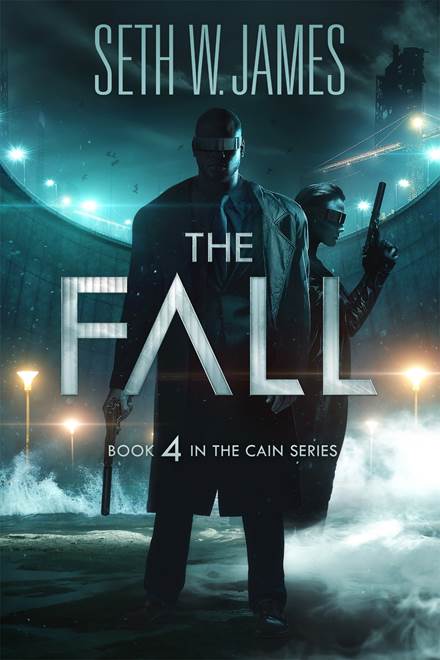
And in our rapidly enshitifying world, it is also a great comfort to know—for me and, I know, for the vast majority of readers—that James does not us so-called “AI” in the production of his covers. Just like the text inside, his covers are 100% handmade, human artistry.
The new cover for The Fall is now live in all formats, but that is the only thing that has changed about them. If you happened to have picked up the older version, well, you now own something of a curiosity; but don’t worry about buying a new copy, because the text inside has not changed.
That’s it for now. In a few weeks I’ll have an announcement for book 5 in The Cain Series as well as news on cycle 2.
Nebula Reaction: So-called “AI” and LLMs have No Place in Fiction
The Nebula Awards (and the Hugo and the Locus and the . . .) rarely attract my attention except for a few minutes the day after they’re announced, just to see if anyone I know took a prize. But with the recent controversy involving the Science Fiction and Fantasy Writers Association (SFWA) changing—and then changing back—the qualifying criteria for the Nebula, I thought I would put down a few thoughts.
The crux of the matter is, as so many things are these days, the use of so-called Artificial Intelligence and Large Language Models (AI and LLMs, respectively). The SFWA board had released updated qualification criteria for works submitted for consideration for the Nebula Awards to include those works created with the use of AI/LLMs—and, not surprisingly, artists everywhere responded with entirely justified outrage. To be clear, there is not now, nor has there ever been, Artificial Intelligence: AI remains what it has always been, a matter of science fiction. What is disingenuously marketed as AI is not intelligent and is, in fact, based on technology that has been around since the 1970s. LLMs, while less disingenuously named than AI, are largely the same thing, simple predictive models executed on a large scale through the use of datacenters (which, incidentally, are helping to worsen climate change, increase fresh-water scarcity, and raise energy prices). Both are, in essence, plagiarism devices because their databases were created by scraping content from creators, usually without notice, consent, or compensation.
A great deal has been written about the evils and incompetence of so-called AI, so I don’t feel that I need to reiterate it at length here. What I did want to address, however, was the SFWA board’s changes to the criteria, both in substance and in process.
In substance, it completely baffles me that the people sitting on the board, who I assumed were fellow artists, would condone the use of AI/LLMs in the “creation” of a work passed off as original art. As the Anthropic (or misanthropic, if we were genuine about it) case plays out, as some tiny, token compensation is paid to authors whose works were stollen, how could the SFWA board possible think that it would be okay to legitimize the plagiarism devices created through Anthropic’s (and other company’s) theft? To put it simply, the AI companies stole our work, broke them down into their component parts, and then cobbled them together to sell as if a new product. Why would any artist agree that such products constitute art, let alone that they should be considered alongside actual, human-written works for the Nebula Awards? Naturally, I have to wonder about the board members’ current and future works, if this seemed acceptable to them. That being said, it is commendable that they very quickly changed course and put the qualification criteria back to what they should have been.
In process, though, this all could have been easily avoided if the board had not taken unilateral action. For something as important as AI/LLMs and the ongoing assault on artists’ autonomy and ownership of their work, any changes to the SFWA’s policies should have been put to a vote by the entire organization. Yes, of course, the board should be able to change certain policies without the entire SFWA having to vote on it; something like when voting begins or ends or the RSVP for the in-person ceremonies are administrative matters that we expect the board to handle on their own. Policies that affect the definitions of work, from the Nebula categories to qualifying venues/markets to authorship criteria, fundamentally define the SFWA, in its purpose and identity. Such policies are statements about the organization’s beliefs and should originate strictly and exclusively from the membership’s consensus. A better grasp of the scope of their decisions is needed from the board in future.
Lastly, I think one of the causes of this mistake is the continued absence of the SFWA members’ website. After the new board was elected, one if their priorities was to overhaul and update the members’ website. It has been about a year, if I remember correctly, and the website is still down. Previously, the members’ website forum was the place where we connected and, at times, debated the issues of the day. I remember controversies about the previous board’s actions in regard to volunteers generating a great deal of discussion, as well as other topics such as TOR’s saturation in recent award cycles, new categories to receive awards, and also news around small presses that had folded and what would happen to their backlists. Without the members’ website, we have lost that virtual townhall and the discussions that had taken place there. Yes, there is a Discord server for the SFWA, but it is highly problematic: for one, access to the Discord is not automatic, members need to discover its existence themselves and then contact someone to get an invite; Discord is also crawling with state actors, is rumored to be hacked constantly by criminals, and is likely selling every word typed into it to AI companies, to populate their datacenters. So, no, Discord is not a suitable alternative and certainly not a replacement.
In closing, I would just like to say to the board that though I applaud their rapid response to artists’ outrage at the inclusion of genAI theft content in the Nebulas, it is a decision that should not have happened in the first place. Please, in future, put such important matters to a vote by the whole SFWA. And, to facilitate this and other worthy discussions, bring the members’ website back online as soon as possible.
Cover Reveal for “The Fall,” Book 4 in “The Cain Series;” Launch Date November 2025
With the cover-art reveal for The Fall, book 4 in The Cain Series, we’re just about there: two books in 2025. Here’s the cover:
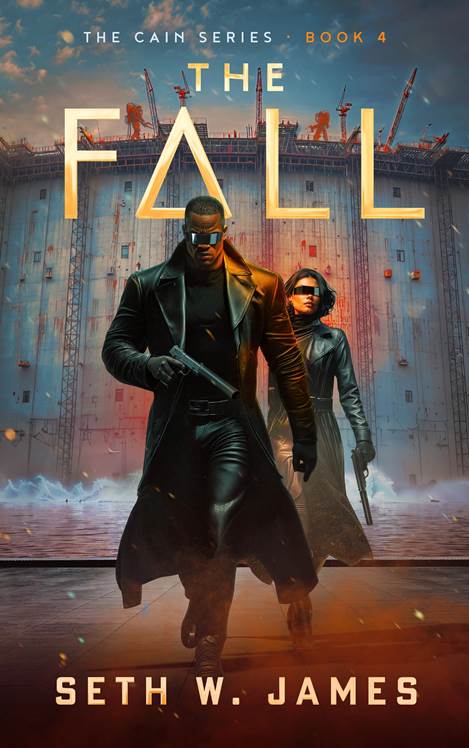
As I wrote for An Uncalculated Risk’s inclusion in Booklife’s ongoing series, Cover Crush (https://booklife.com/news/create/art-design/08/26/2025/cover-crush-striking-indie-designs-that-tell-a-story.html), growing up in the ‘80s, I loved the movie-poster style that so many paperbacks enjoyed. From the little details relating to the story, to the promise of this or that scene, those types of covers—and the covers of The Cain Series—are artworks all on their own, and not merely a colorful necessity for enclosing the text. Readers may notice, for instance, in The Fall’s cover, that Francesca has returned but, unlike her appearance on the cover for A Desperate Measure, this time she’s dressed in a dark coat and AR-enabled sunglasses, both similar to Cain’s. Hmmm, now what could that mean?
Anyway, as I mentioned in last month’s post, I did an interview with AllAuthor, which you can find here: https://allauthor.com/interview/sethwjames/
That’s it for now. We’re coming down to the finish line: only a few last assets need to come in and The Fall will be ready for the big red button, come November. Until then, happy reading!
New Novel Pre-release Announcement: “The Fall,” Book 4 of “The Cain Series,” Coming November 2025.
The Fall, book 4 of The Cain Series, will publish this November, 2025, in ebook, paperback, and hardcover formats. Like all Cain Series novels, The Fall is an episodic, near-future, cyberpunk, science fiction novel. In this latest installment, the pan-European seawall—for which Francesca had advocated throughout the previous three books—is finally under construction, but threats to its future remain. While investigating the sabotage of construction drones, she and Cain uncover a massive conspiracy that endangers not only the seawall, but everyone laboring to build it.
Back-cover copy:
“As global food-scarcity spiraled out of control, the European Seawall Project finally began constructing the massive edifice that would reclaim lands lost to rising sea levels—and upon them build the farms that would avert famine. The workers laboring to raise the seawall were provided with the very best: fusion-powered exoskeletons, excellent pay, and a perpetually hovering artificial island, where they could enjoy their off-hours near the seawall amid every pleasure and vice money could buy. Despite the urgency of their work and the joys of life on the island, not everyone was satisfied—and someone had begun sabotaging construction drones.
Francesca Pieralisi, the former prosecutor turned seawall-project director, was then sent in to identify the saboteur and his grievances. She was not given a free hand to investigate, however, nor authorized to solve whatever problems she discovered, not since Paul Devouard, ESF Chief and her boss, had lost faith in her judgement after the near-disaster of the Bolivian affair. Barred from official resources, Francesca could only rely upon herself—and Cain. Calling upon his expertise as an elite soldat de fortune, Cain enlisted the aid of his old criminal network, to cut through the misdirection and outright lies, and to uncover the truth.
Cain and Francesca soon discovered the many forces exploiting the island, from an avaricious drone corp, to corrupt private cops, to a criminal syndicate and its burgeoning underground. It was not until they began covertly neutralizing these threats, however, that they uncovered the massive conspiracy behind it all—and the atrocity central to its scheme. To save the seawall and any hope of averting famine, they must now excise the threat with a surgical strike. But will their desperate action be enough—or too much?”
With The Fall, The Cain Series’ first novel cycle nears its conclusion, as the first five novels in the series comprise cycle 1: cycle 2 will begin immediately afterward, with book 6. I wrote about my use of the episodic form and the series’ cycles here: https://www.sethwjames.com/stories-within-stories-the-episodic-form-and-novel-cycles-in-the-cain-series/
Though a darker and more tragic book than the previous three, I thoroughly enjoyed writing The Fall. The real world has, sadly, descended again into fascism, perpetual deception, and war: wading through the intentional chaos around us to find clarity, purpose, and a way forward may seem impossible, at times, but I hope that books like The Fall can offer readers a world-in-miniature, a microcosm upon which to focus and, through that mirror held up to nature, discover their own understanding. I also hope everyone enjoys the book as the kick-‘em-in-the-teeth, cyberpunk, action adventure that it is!
Book 5 in The Cain Series is already underway and I expect to publish it sometime late spring 2026. Unlike this year, though, I will likely publish only one novel next year: after completing cycle 1 in the series, I’ll need to devote the second half of the year to structuring cycle 2. It may not take too long, as cycle 2 will comprise only books 6, 7, and 8, and so it isn’t impossible that I’ll be able to complete book 6 before the end of 2026, but it’s less likely.
In any event, I’m thrilled to be nearing the end of this first cycle in The Cain Series and hope that readers returning from An Uncalculated Risk will enjoy reading The Fall as much as I enjoyed writing it.
Updates, Updates, Updates
Just a quick blog post this month. Book 4 of The Cain Series is still on track for publication this year, though August is the worst month in any kind of publishing to collaborate (peer-review, proofreading, cover creation, whatever—everyone’s on vacation; well, except me). I hope to be able to officially announce it next month.
In other news, the cover for An Uncalculated Risk was selected by Booklife for its ongoing series, Cover Crush. It should appear in the September issue. I love all of the covers for The Cain Series, so it’s great to see one of them get some love. I’ll probably wind up throwing the link to the Cover Crush issue into another post, for convenience.
In still more news, I have an interview coming out, date TBD, with AllAuthor. Not sure when that will happen, but it was fun to do. As always, I wound up proselytizing about what cyberpunk is and why it’s important, but I also pulled back the curtain a bit on my writing process, which I usually don’t, as I think writers—particularly early-career writers—get far too much advice and most of it is not appropriate for them or just flat-out wrong. I say so in the interview, so hopefully that message will come across.
Anyway, that’s it for now. My thanks to all of the returning readers who have enjoyed An Uncalculated Risk, and to new readers, too, who are just discovering The Cain Series.
Happy reading!
New Novel Pre-release Announcement: “An Uncalculated Risk,” Book 3 of “The Cain Series,” Coming May 2025.
An Uncalculated Risk, book 3 of The Cain Series, will publish this May, 2025, in ebook, paperback, and hardcover formats. Like all Cain Series novels, An Uncalculated Risk is an episodic, near-future, cyberpunk, science fiction novel. In this installment, Cain and Francesca travel to South America to uncover the monstrously wealthy force behind a mercenary invasion of Bolivia, which has disrupted their tin exports and, consequently, Francesca’s seawall project. Nothing is every as it seems, though, and the cat-and-mouse of spycraft soon escalates to armed conflict.
Back-cover copy:
“In the fusion age, war for commerce had become a commonplace. But when an unusually well-financed mercenary force seized the Alto Madidi mining complex in the Bolivian Andes, they set off a cascade of events that brought the global tin market to its knees—and threatened Francesca Pieralisi’s seawall project. Tin was indispensable to the manufacture of construction exoskeletons, called “connies,” and connies were the only means by which the seawall could be built, to reclaim the farmlands that would stave off the looming threat of famine.
To discover who had hired the mercenaries—and to determine if their goal was simply theft or an attack on EU interests—EU INTCEN tasked Francesca (and, with her, Cain) to go to Bolivia and find the truth. What they found was a plot by the richest man on Earth—or off of it—and a global extortion conspiracy involving bribery, kidnapping, and war. Francesca, undaunted by the odds, would stop at nothing to save her seawall project, but soon found herself betrayed by her own zeal, manipulated into compromising her reputation and career, and saw her life pushed to the cliff’s edge.
Cain must now fight through a web of off-world, sovereign corporations, conspiracies and counter-conspiracies, to make a lie the truth, and to pull Francesca back from oblivion. From Sovereign Trade Zones in the American South to the rainforests of South America, Cain battles not only to remove the mercenary brigade, but to short-circuit the machinations of a trillionaire in An Uncalculated Risk, book 3 of The Cain Series.”
Like Ethos of Cain, book 1 of The Cain Series, An Uncalculated Risk is told in five parts, as Cain and Francesca pursue one clue after another, hunting down those responsible for the invasion. I’ll release the cover art next month—and it’s a good one, too—followed by publication of the novel in May.
As a special sneak preview, An Uncalculated Risk will likely NOT be the only Cain Series novel published in 2025. I’m on track to have book 4 in the series ready for publication by the end of the year. Whether that means late November or early December remains to be seen; there are several factors involved, including cover creation, proofreading, typesetting, etc, and any one of them could suffer a delay. I’ll have a better idea by summer’s end and will post another update on book 4 then. For now, I’d like to say thank you to every reader who has enjoyed—and especially to those who took the time to review, always massively appreciated—Ethos of Cain and A Desperate Measure. I hope you will check out An Uncalculated Risk this May.